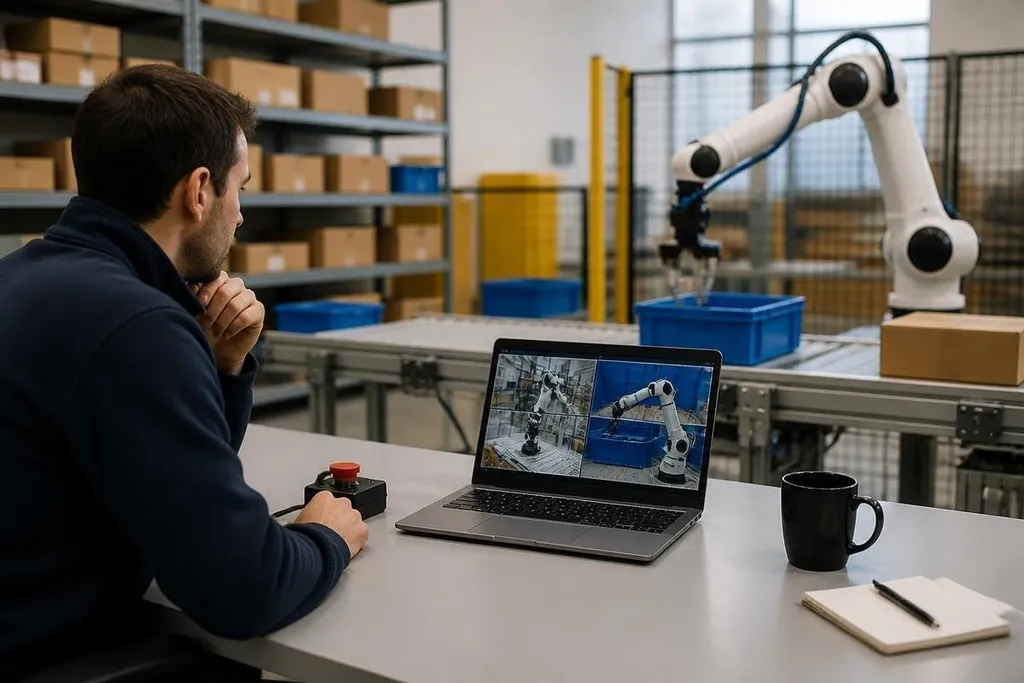
A robot can stop, turn, lift, or choose the wrong object in less than a second. Human oversight gives people a way to spot that error, pause the system, and decide what should happen next.
This matters most when a robot works near people, handles valuable goods, or makes choices from sensor data. The aim isn't to control every motor move. It’s to keep a person responsible for the decisions that carry real risk.
Quick read
- A human can catch unsafe conditions that the robot’s sensors and software miss.
- Clear stop controls matter more when the robot works near people.
- Oversight must include training, logs, and a named person who can act.
What oversight does
Human oversight covers more than watching a screen. It includes setting safe limits, checking the work area, reviewing alerts, and taking control when the robot meets a situation outside its normal task.
A warehouse robot may follow a mapped route, for example, but a box on the floor can change that route. A camera may see the box while missing a person’s hand behind it. A supervisor can stop the task, clear the area, and decide if the robot should resume.
That person also checks the conditions around the system. A blocked aisle, a wet floor, a changed load, or a damaged cable can turn a normal movement into a hazard.
The robot may still report that its motors and sensors are working, even though the job itself is no longer safe.
Why autonomous systems still need people
Autonomous software makes choices from rules, sensor readings, and stored maps. It can react quickly inside the cases it was built to handle. A new object, poor lighting, a lost location signal, or an unusual human movement can push the system outside those cases.
The problem isn't that robots make choices. The problem is that their choices depend on what they can sense and what their software expects to find. A person can use context that the system does not have, such as a maintenance worker entering an area or a package marked for manual handling.
Human review also helps after an error. Logs can show what the robot sensed, which command it ran, and when a person stepped in. That record helps a team fix the task instead of treating each failure as a one-off event.
A human override only counts when the team can trace who used it, when, and why. Reports at Robot24.com can tie those details to a named robot and work setting before the next section examines how teams build oversight into the system.
Oversight must be built into the system
A person cannot supervise a robot well if the controls are hard to find or the alerts arrive too late. The stop button needs a clear location. The display needs to show the fault in plain language. The system needs a known safe state after a stop.
The handoff between robot and person also needs a rule. A supervisor should know who can pause the machine, who can inspect it, and who can restart it. If those duties are unclear, an alert can sit on a screen while people assume someone else is handling it.
The same rule applies to remote supervision. One person watching several robots may miss a warning if all the systems send alerts at once. The work plan needs to set a sensible number of machines for each supervisor, based on the task and the time needed to respond.
I’d rather see a slower robot with a clear stop process than a faster one that leaves its supervisor guessing.
A practical check before deployment
Use this list before a robot starts work around people or valuable goods:
- Name the supervisor: Record who can pause the robot and who can restart it.
- Test the stop path: Trigger an emergency stop and check where the robot ends up.
- Set the work limits: Mark the areas, loads, speeds, and tasks the robot can handle.
- Write the fault response: Give each common alert a clear next step.
- Review the logs: Check what the robot sensed and what the supervisor did after a stop.
- Train for handoff: Practice taking control during a blocked route, sensor fault, or changed work area.
These checks turn oversight from a job title into a working part of the robot system. They also give managers a way to find weak points before an incident forces the lesson.
The open question is how much supervision each task needs. A robot moving through an empty storage area may need occasional review; one sharing space with workers needs faster human action and clearer limits. The right measure is the time between a robot’s mistake and a person’s safe response.